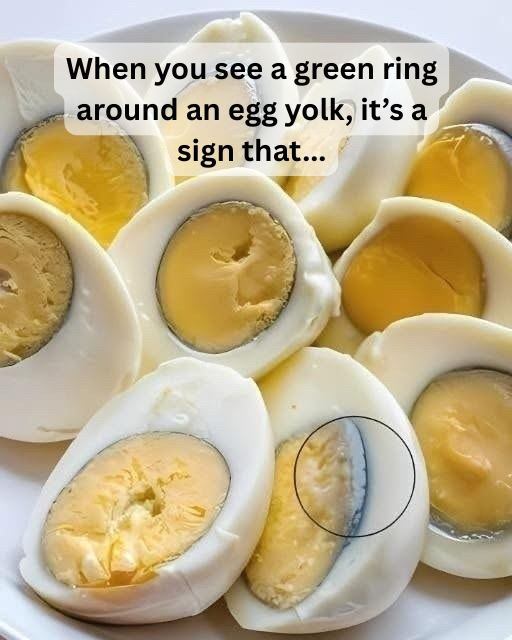
That Greenish Ring Around Hard-Boiled Eggs Has a Simple Explanation

Have you ever peeled a hard-boiled egg, sliced it open, and noticed a greenish-gray ring surrounding the yolk?

Many people assume it means the egg is spoiled or unsafe to eat. Fortunately, that’s usually not the case. The mysterious ring is actually the result of a completely natural chemical reaction that occurs during cooking.

What Causes the Green Ring?

The discoloration forms when eggs are cooked for too long or at excessively high temperatures.

As the egg cooks, sulfur in the egg white reacts with iron in the yolk. This reaction creates a compound called ferrous sulfide, which appears as a greenish-gray layer where the white and yolk meet.

The longer the egg is exposed to heat, the more likely this ring is to develop.

Is It Safe to Eat?

The good news is that the green ring does not mean the egg has gone bad.

In most cases, eggs with this discoloration are perfectly safe to eat as long as they were properly stored and handled. The ring affects appearance more than anything else.

Some people may notice a slightly stronger sulfur smell or a somewhat drier texture, but the egg remains edible.

Why Some Eggs Have It and Others Don’t

Several factors influence whether the ring appears:

  • Cooking time
  • Water temperature
  • Egg size
  • Cooling method after cooking
  • Freshness of the egg

Overcooking is usually the biggest factor. Eggs left in boiling water for too long are much more likely to develop the discoloration.

How to Prevent It