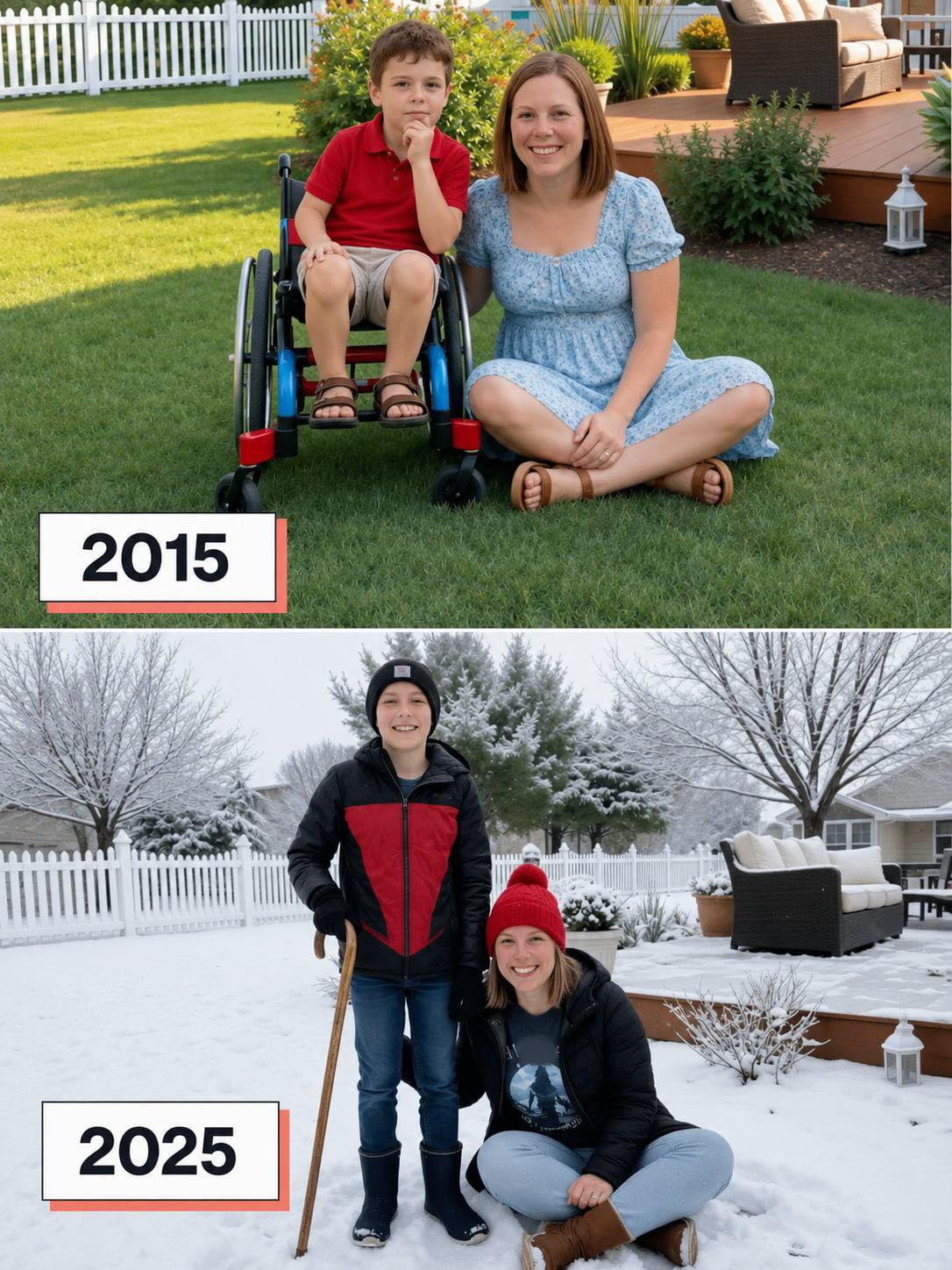
So I chose him.
The First Year Was Survival
People talk about “adjusting,” like it’s a gentle process. For me, the first year felt like learning to breathe underwater.
I learned how to lift Evan without hurting his hips. I learned how to help him dress in a way that didn’t make him feel small. I learned how to schedule life around therapy appointments and energy crashes, around pain and stiffness and days when his legs simply wouldn’t cooperate.
I learned words I never wanted in my vocabulary. I memorized medical instructions. I signed forms until my hand ached. I sat in waiting rooms for hours, pretending I wasn’t terrified of what a doctor might say next.
I worked two jobs. In the daytime, I waitressed until my feet burned. At night, I cleaned office buildings long after the city had gone quiet.
When Evan finally slept, I studied online courses about special education and disability support because I couldn’t stand the idea of failing him just because I was new to this.
Some nights I cried in the bathroom, silently, with a towel pressed to my face so he wouldn’t hear. I cried from exhaustion. I cried from fear. I cried from anger at my sister. I cried because I missed the life I used to have.
And then morning would come, and Evan would look at me like I was the safest person in the world.
Survival Nights — Love doesn’t always look pretty. Sometimes it looks like staying up anyway.
The Kind of Kid Who Makes You Strong
Evan didn’t complain the way you’d expect a child to complain.
When other kids ran past him at the playground, he clapped for them instead of sulking. When strangers stared, he smiled back like their discomfort wasn’t his problem to carry.
After therapy sessions that left him sore and drained, he would whisper, “It’s okay, Auntie. I’m brave.”
Those words broke my heart and built it back up at the same time.
There were days I wanted to quit. Days I wondered if I was strong enough. Days I stared at my bank account and felt panic rise in my throat.