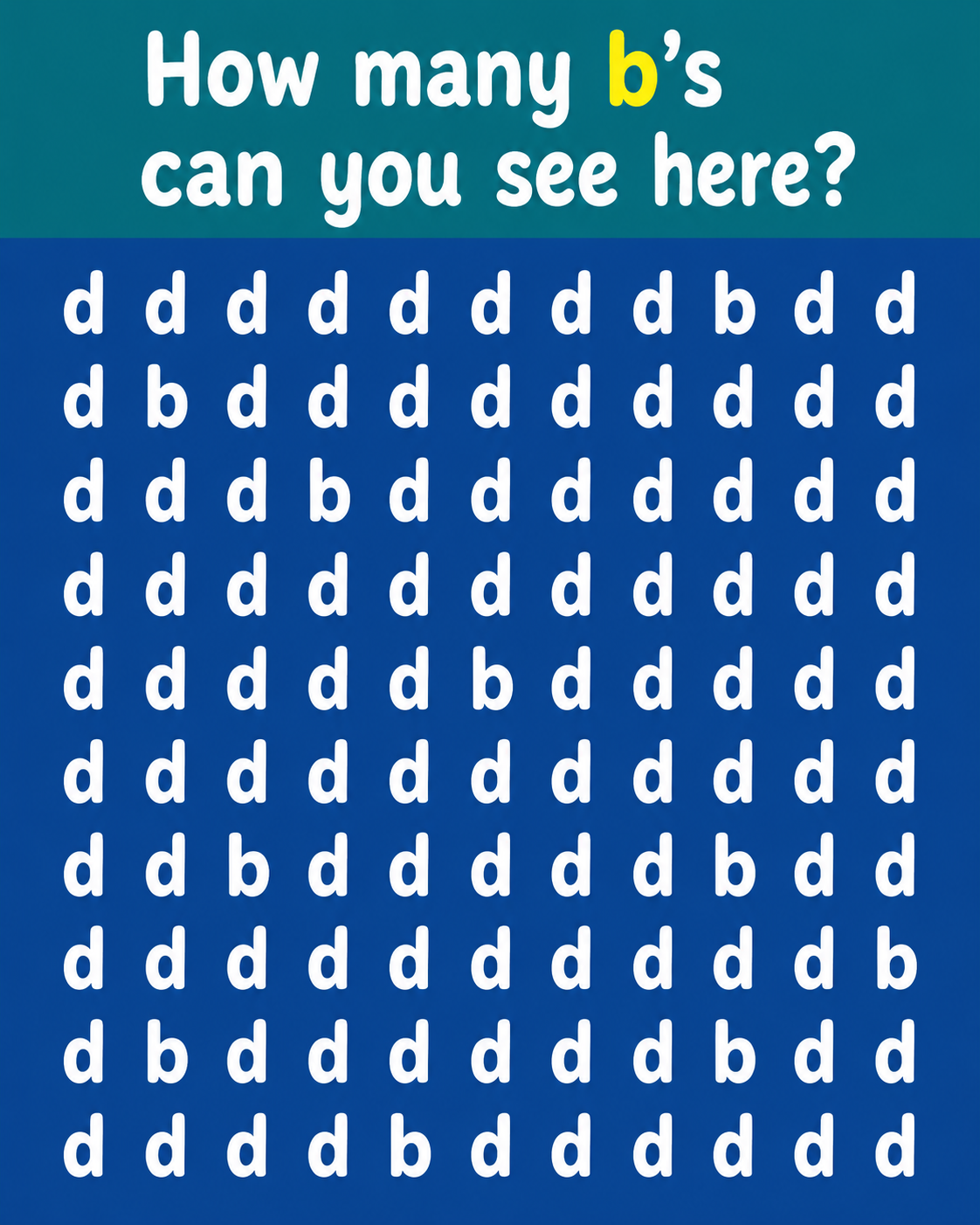
Children are more likely to inspect items individually.
While adults think:
“These are probably all d’s.”
Children often examine each character separately.
Their slower, more deliberate approach can lead to surprisingly accurate results.
This demonstrates that efficiency isn’t always an advantage.
Sometimes careful observation wins.
The Hidden Lesson Behind the Puzzle
Beyond entertainment, this challenge teaches an important lesson.
Our brains constantly make assumptions.
Usually those assumptions help us navigate the world efficiently.
But sometimes they cause us to overlook critical details.
This happens in everyday life:
- Missing an error in an email
- Overlooking a typo in a document
- Misplacing keys in plain sight
- Failing to notice a road sign
- Ignoring important information because it doesn’t match expectations
The puzzle serves as a reminder that perception isn’t perfect.
What we think we see isn’t always what is actually there.
Why We Love Being Challenged
Humans enjoy puzzles because they provide a safe form of challenge.